
Carbon Monoxide from Your Chimney: 8 Warning Signs Sweeps Look For
CO poisoning from a chimney is silent and often blamed on the flu. Here are the 8 signs sweeps check for on every service call.
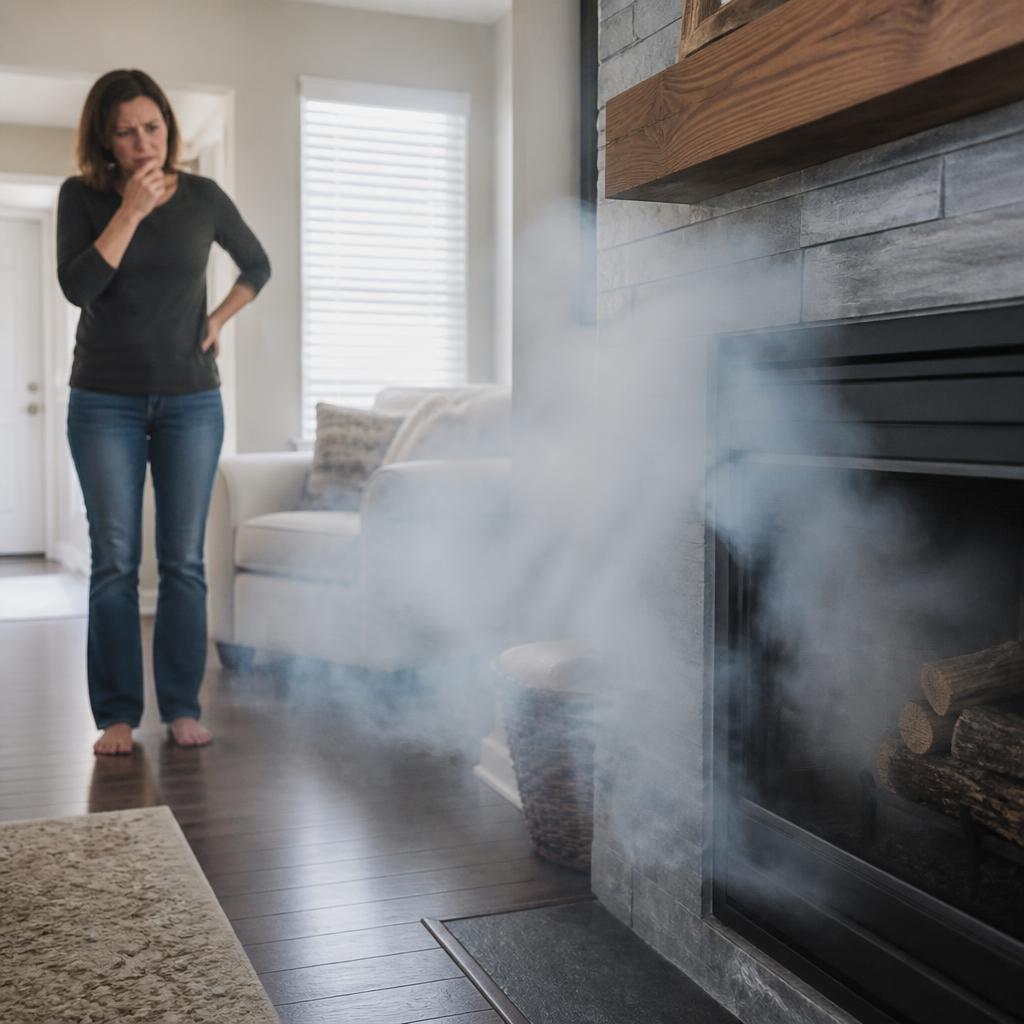
Carbon monoxide from a chimney is invisible, odorless, and almost always mistaken for the winter flu. It kills roughly 400 Americans a year — most of them at home, most of them from vented appliances or fireplaces. Here's what we look for on every inspection, in the order it matters.
1. A CO detector that keeps triggering "for no reason"
The alarm is right. Do not reset it, do not remove the battery. Ventilate the house, get everyone outside, and call the fire department first, a sweep second.
2. Headaches, dizziness, nausea that clear up when you leave the house
Classic CO exposure. If symptoms disappear at work and return at home, that's the flue talking.
3. Yellow flames instead of blue on a gas fireplace or furnace
Blue = complete combustion. Yellow = incomplete combustion producing CO. A gas log set should have some yellow tips for realism, but the base of the flame should be blue.
4. Soot streaks around the fireplace opening or vent cap
Black staining on a masonry face or above a gas vent means combustion products aren't clearing. That's a draft problem, and CO rides the same current.
5. Excessive condensation on windows near the fireplace
Every unit of gas or propane burned produces about a gallon of water vapor. If you see fog on the glass when the appliance runs, the venting isn't working.
6. A blocked or partially collapsed chimney
Debris, animal nests, a cracked liner, or a fallen chunk of clay tile can partially block the flue. Combustion still happens; the byproducts just come back inside.
7. Negative pressure from other appliances
A running kitchen hood, bathroom fan, or clothes dryer can overpower a marginal draft and pull CO back down the chimney. Modern airtight homes make this worse.
8. Recent HVAC or bathroom-fan upgrade
We see this every winter — a new high-CFM range hood gets installed, and suddenly the fireplace backdrafts. The chimney didn't change; the pressure balance did.
The sweep's diagnostic
We run a combustion analyzer at the appliance and a draft manometer at the flue. Together they tell us whether CO is being produced (analyzer) and whether it's leaving the building (manometer). No guessing.
What to do tonight if you're worried
Install a plug-in CO detector with a digital PPM readout (not just an alarm) within 10 ft of the fireplace. Levels above 9 ppm sustained warrant a service call; anything above 35 ppm is an emergency. This is the cheapest peace-of-mind money you'll spend this winter.
Need Help With Your Chimney or Fireplace?
Live dispatcher, seven days a week — nationwide.