
Chase Cover vs. Chimney Cap: What's the Difference and Which Do You Need?
Homeowners confuse these constantly. Here's what a chase cover is, what a chimney cap is, and which your specific chimney actually needs.
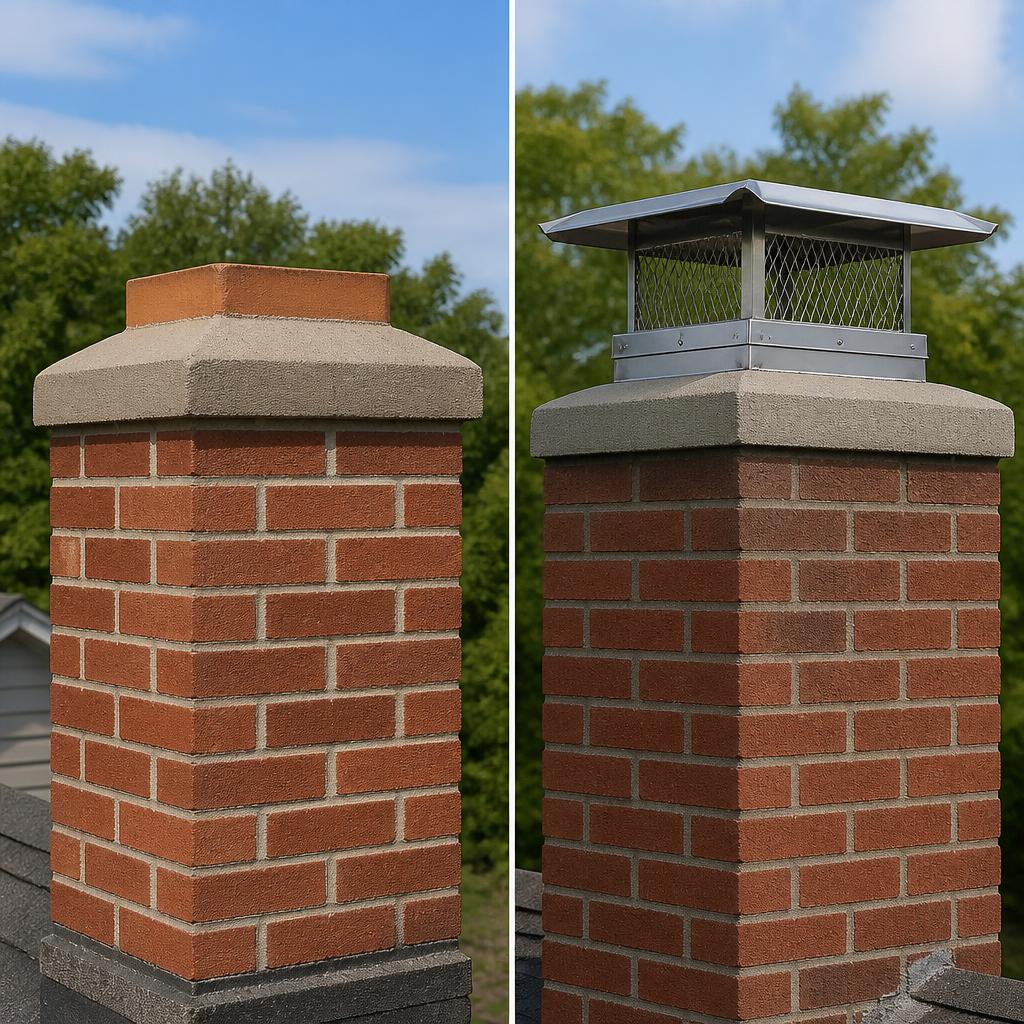
Two of the most-confused parts of any chimney sit right next to each other at the top. Homeowners call them both "the cap." Sweeps do not. Here's the actual difference, why it matters, and what each costs in 2026.
Chimney cap
The chimney cap is the small metal hood over the flue opening. Its job is to keep rain, animals, and debris out of the flue itself while still letting smoke out.
- Usually stainless steel or copper
- Mounts directly to the top of the flue tile or liner
- Includes a mesh spark arrestor (code required in most areas)
- Fits both masonry and prefab chimneys
- Every working flue should have one
Chase cover
The chase cover is the large flat metal pan that covers the entire top of a prefab (factory-built) chimney chase — the framed box that surrounds a metal flue. It's the horizontal surface you'd see if you looked down at the chimney from a drone.
- Only exists on prefab chimneys — masonry chimneys have a concrete crown instead
- Usually galvanized steel (rusts) or stainless / copper (doesn't)
- The flue liner penetrates through a raised collar in the middle
- Sheds all rain, snow, and debris away from the chase framing below
Why the difference matters
- On a masonry chimney you have a concrete crown and one or more small caps — no chase cover exists.
- On a prefab chimney you have a full-width chase cover and a cap on top of the flue penetration.
Calling the wrong tech for the wrong part is how homeowners end up paying twice.
The failure that costs the most: rusted galvanized chase covers
Nearly every prefab chimney built before the early 2000s came with a galvanized steel chase cover. They rust from the underside first — you can't see it. Once they leak, water pours directly into the wood chase framing, and rot destroys the structure from the inside out.
Signs your chase cover is failing:
- Orange rust streaks running down the sides of the chase
- Water stains on the ceiling below or around the fireplace
- Cover sags in the middle instead of shedding water outward
- Screws are visibly rusted through
Real 2026 pricing
Chimney caps
- Single-flue stainless cap: $250 – $475 installed
- Multi-flue custom cap: $600 – $1,400 installed
- Copper upgrade: add $300 – $700
Chase covers
- Standard galvanized replacement (not recommended): $450 – $750
- Stainless steel chase cover with proper cross-break drainage: $850 – $1,600
- Copper chase cover: $1,400 – $2,800
- Custom multi-flue prefab chase cover: $1,200 – $2,400
What a proper install includes
- Full measurement (never a stock size on prefab — every chase varies)
- Cross-break design so water sheds outward, not toward the flue
- Silicone sealant at all corners and screw holes
- New collar seal around the flue penetration
- Replacement of the cap at the same time (it's already 15 years old if the chase cover is)
Bottom line
If you have a brick chimney, you're talking about a cap — cheap, quick, done in an hour. If you have a prefab chase (usually recognizable by siding, stucco, or wood cladding instead of bricks), you're talking about a chase cover — bigger, more expensive, and long past due for replacement on any home built before 2005.
Need Help With Your Chimney or Fireplace?
Live dispatcher, seven days a week — nationwide.