
Chimney Flashing Repair: The #1 Cause of Chimney Leaks
That water stain on the ceiling? It's almost always the flashing, not the chimney. Here's how sweeps diagnose and fix it in 2026.
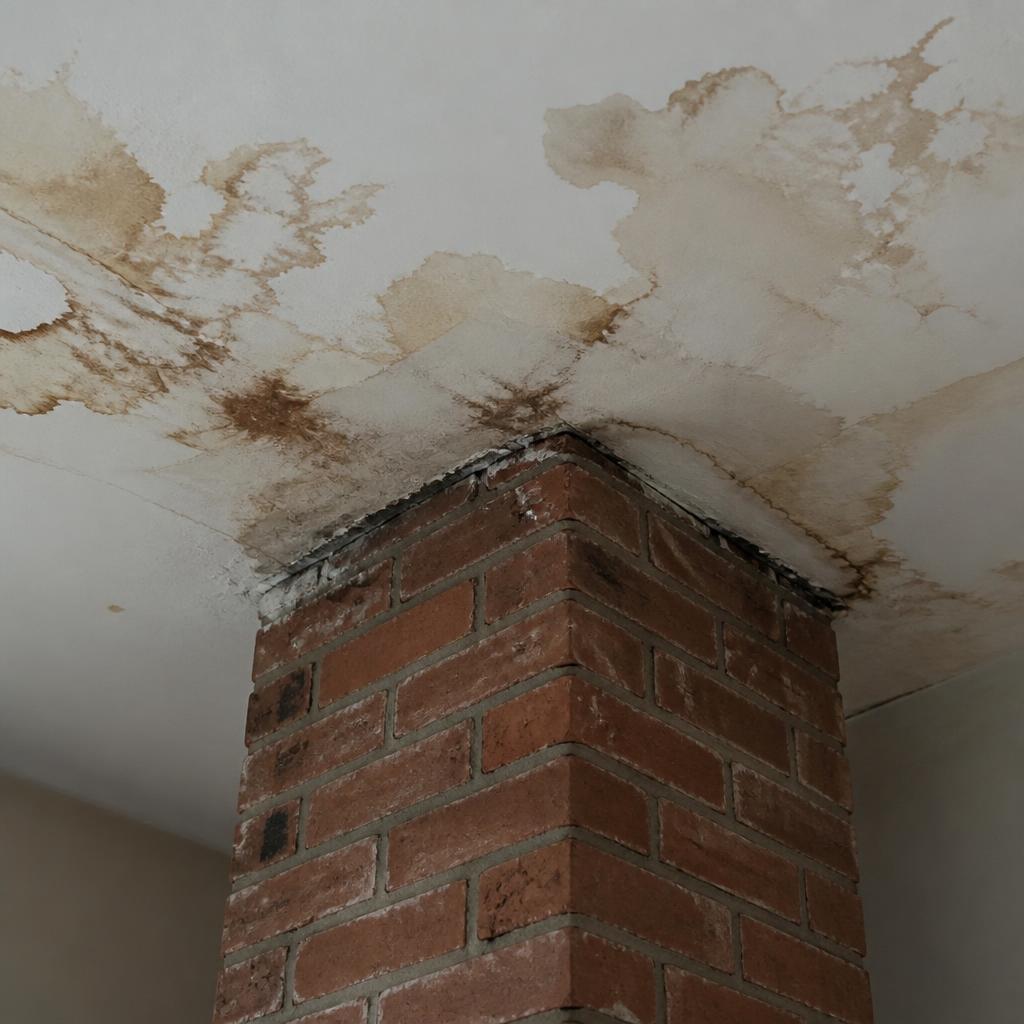
When water shows up on a ceiling near a chimney, the homeowner blames the chimney. Nine times out of ten, it's the flashing — the metal that seals the joint where the chimney meets the roof. Here's how it fails, how a sweep actually fixes it, and what 2026 pricing looks like.
What chimney flashing is (and isn't)
Flashing is a two-piece metal seal:
- Step flashing — L-shaped pieces woven into the shingles, one per course
- Counter flashing — larger pieces embedded into the mortar joints of the chimney, covering the top edge of the step flashing
A cricket (also called a saddle) is an added ridge behind chimneys wider than 30 inches, diverting water around the chimney instead of letting it dam up.
Caulk is not flashing. If your last "flashing repair" was a bead of black roofing tar, that's the problem — not the solution.
The five ways flashing fails
- Tar bandaid over failed metal — the most common. Tar cracks in 2–3 years; water gets under it and hides.
- Counter flashing lifted out of mortar joints — freeze-thaw pushes it out. You'll see a gap you can slide a credit card into.
- Missing cricket on a wide chimney — snow and leaves build up behind the chimney and hold water against the flashing all winter.
- Rusted galvanized flashing — 30+ year old homes. The metal is done.
- Shingle-over installation — flashing installed on top of shingles instead of woven between them. Every rain runs behind it.
How a real repair works
- Remove the surrounding shingles (typically 2–3 courses on each side)
- Strip old flashing and any tar
- Rake out mortar joints where counter flashing embeds — 3/4 inch deep
- Install new step flashing, one L per shingle course, in aluminum or copper
- Install new counter flashing bent into the raked joints, sealed with polyurethane sealant (not silicone, not tar)
- Reinstall shingles over the step flashing
- Add a cricket if the chimney is wider than 30 inches
- Water test with a hose from the top down before finishing
Real 2026 pricing
- Basic reflashing (chimney under 30 inches wide, aluminum): $650 – $1,400
- Reflashing with new cricket: $1,200 – $2,400
- Copper flashing upgrade: add $500 – $1,100
- Full tear-out + rotted decking repair: $1,800 – $4,500
The red flag quotes
- "We'll just seal it with tar" — that's a 2-year fix at best
- "You need a whole new roof" — usually you don't; the leak is 4 sq ft, not the roof
- Anyone quoting flashing repair without going into the attic to check for existing water damage on decking and framing
- Any quote that doesn't include a water test at completion
After the repair
Ask for photos of the cut-out mortar joints, the new metal in place, and the water test. Save them. Flashing lasts 20–30 years in copper, 15–20 in aluminum — you shouldn't need to think about this again for a long time.
Need Help With Your Chimney or Fireplace?
Live dispatcher, seven days a week — nationwide.